Ittihad-ittifaq-Insaf
Indian Muslims for Civil Rights (IMCR) proceeds on the foundational premise that the progress of a nation is inseparable from the safety, security, dignity of its citizens.
Where citizens—the reason for the existence of the Republic—are compelled to live under uncertainty or fear regarding their civil and political rights, national progress becomes illusory.
The mere recognition of rights is insufficient; what is essential is their consistent, robust, and impartial enforcement through constitutional institutions.
IMCR’s legal interventions are rooted in the conviction that social cohesion, constitutional fidelity, and the rule of law are indispensable to India’s democratic framework.
Through strategic litigation and principled advocacy, IMCR seeks to protect fundamental freedoms, arrest systemic constitutional violations, and ensure that executive and institutional actions remain within the bounds of legality.
Since inception, IMCR has committed itself to standing with the lost, the last, and the lonely—particularly those who lack the means or access to seek redress against violations of their civil and political rights.
Interventions of IMCR focus not merely on individual relief, but on addressing patterns of illegality, arbitrariness, and discrimination that erode public confidence in constitutional governance.
The legal actions undertaken by IMCR reflect its larger commitment to fostering harmony (ittihād), amity (ittifāq), and justice (insāf) among all Indians.
By raising pressing constitutional questions before courts, IMCR endeavours to reinforce the principles enshrined in the Constitution of India and to promote fraternity, equality, and shared citizenship as the cornerstones of a strong and democratic republic.

Given below are some of IMCR’s notable legal interventions before the Hon'ble Supreme Court of India and the High Courts of different states:
PLACES OF WORSHIP ACT
Given the rampant abuse of judicial process by making claims against historically recorded mosques that have stood for centuries, IMCR has strongly intervened in the pending litigation pertaining to the Places of Worship (Special Provisions) Act, 1991 seeking strict enforcement of its provisions and protection of places of worship of all religions as they existed of the day of our nation’s independence.
The matter is presently pending with the Hon’ble Supreme Court having passed a strict order in December 2024 directing no fresh suits claiming a recognised place of worship as that of another religion would be entertained and no survey or inspection would be ordered in such cases.
NUH DEMOLITIONS
In 2023, when the High Court of Punjab and Haryana at Chandigarh took suo motu cognizance of the widespread demolitions in Nuh and Gurugram, IMCR intervened to assist the Court and highlighted the unlawful nature of the demolitions, which were carried out without notice and in violation of principles of natural justice, disproportionately affecting one community.
Although the suo motu matter was disposed of with directions to follow the judgment in In Re: Demolitions as declared by the Hon’ble Supreme Court, IMCR continues to support writ petitions on behalf of individuals of limited means, seeking compensation for the high-handed manner in which their properties were demolished without any prior proximate notice. These writ petitions remain pending before the Hon’ble High Court, and the Petitioners retain strong grounds and expectations for relief.
CHALLENGE TO WAQF (AMENDMENT) ACT, 2025
IMCR has also taken a leading role in challenging the recently enacted Waqf Act, which it considers a violation of the religious and constitutional rights of the Muslim community.
Acting through its Chairman, former MP Mohammad Adeeb, IMCR filed a petition before the Hon’ble Supreme Court, raising serious concerns regarding the dilution of Waqf autonomy, the inclusion of non-Muslim members in Waqf Boards and the Central Waqf Council, and the extensive control vested in state governments over Waqf properties. IMCR maintains that the legislation undermines the community’s right to manage its religious institutions and assets.
ELECTION COMMISSION’S SPECIAL INTENSIVE REVISION
IMCR, acting through its President, in furtherance of its mandate to safeguard civil and constitutional rights, has also instituted an independent writ petition before this Hon’ble Court challenging the legality and constitutional validity of the Special Intensive Revision (SIR) initiated in the State of Bihar.
IMCR has specifically assailed the Election Commission’s direction requiring all electors enrolled after 01.01.2003 to furnish documentary proof of Indian citizenship, contending that such an unprecedented exercise has the potential to disenfranchise large sections of genuine citizens, disproportionately burden vulnerable communities, and convert the electoral revision process into a citizenship verification mechanism wholly unknown to the Representation of People Act, 1950.
IMCR has therefore sought to prevent the erosion of fundamental rights and to ensure that the electoral process remains fair, inclusive, and constitutionally compliant.
MAULANA AZAD EDUCATION FOUNDATION
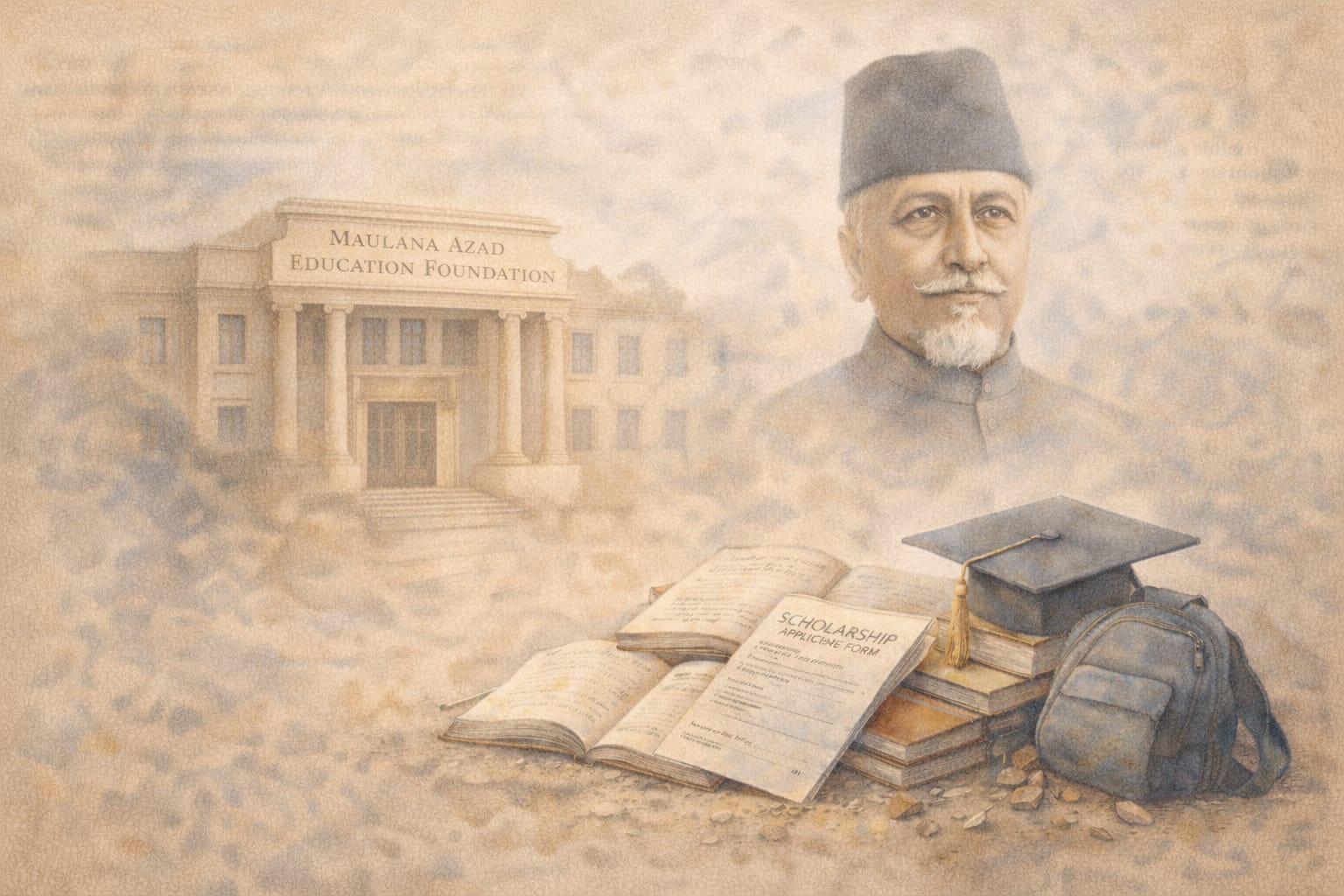
IMCR has actively pursued cases challenging the illegal dissolution of the Maulana Azad Education Foundation by the Ministry of Minority Affairs not only advocating against the unreasonableness of disbanding a body with a proven record of providing assistance for enhancing infrastructure in Minority institutions and for promotion of education amongst female minority students by means of scholarships, amongst others, but also to defend the attempts to erase any memories related to Maulana Abul Kalam Azad. Initially the same was challenged and contested before the Delhi High Court and thereafter before the Hon’ble Supreme Court of India where the same is pending.